
Getting a blood test done feels routine — until your doctor questions the report.
You got a lab slip from your doctor. It says “fasting blood test” — and suddenly you have questions.
Can I drink water? What if I accidentally ate something? What time should I go? Can I take my morning medicines?
If you live in Gaur City, Greater Noida West, or anywhere in Noida Extension, you are probably used to the morning rush — school runs, office commutes, packed lifts. Adding a fasting blood test to that routine can feel stressful if you do not know what to expect.
The good news? Preparing for a fasting blood test is much simpler than most people think. This guide walks you through everything — step by step, in plain language.
What Is a Fasting Blood Test?
A fasting blood test is simply a blood test done after you have gone without eating or drinking anything (except water) for a set number of hours — usually 8 to 12 hours.
Why fasting? Because food changes things in your blood. When you eat, your blood sugar rises, your cholesterol levels shift, and several other values fluctuate. Fasting gives your doctor a clean, accurate baseline — a true picture of how your body is actually functioning, not just how it reacted to your last meal.
Which Tests Require Fasting?
Not every blood test requires fasting. Here are the common ones that do:
- Fasting Blood Sugar (FBS) — checks blood glucose levels, used to diagnose or monitor diabetes
- Lipid Profile — measures cholesterol and triglycerides
- HbA1c — a 3-month average of blood sugar (fasting not strictly required, but often preferred)
- Liver Function Test (LFT) — assesses liver health
- Kidney Function Test (KFT / RFT) — checks how well your kidneys are working
- Thyroid Profile (T3, T4, TSH) — fasting not always mandatory, but many labs recommend it
- Iron Studies — checks iron levels in the blood
Tests that do NOT require fasting include CBC (Complete Blood Count), most hormone tests, and many vitamin level checks.
When in doubt, always ask your doctor or call your lab beforehand.
How Many Hours Should You Fast?
For most fasting blood tests, 8 to 12 hours of fasting is the standard.
The easiest approach for most families in Gaur City — have your dinner by 9 PM, skip breakfast the next morning, and get your blood drawn between 7 AM and 9 AM. That way you are comfortably within the fasting window and your day is barely disrupted.
What Can You Have During the Fasting Period?
You CAN have:
- Plain water — drink it freely. Staying well hydrated actually makes it easier to draw blood. Dehydration shrinks your veins and makes the process harder
- Plain medicines — if your doctor has asked you to continue your regular medicines (blood pressure tablets, thyroid medicines, etc.), take them with a small sip of water unless specifically told otherwise
You CANNOT have:
- Tea or coffee — even without sugar. The compounds in tea and coffee affect your results
- Milk or any dairy
- Fruit juices, soft drinks, or packaged drinks
- Chewing gum or mouth fresheners — these can trigger insulin release
- Tobacco or gutka — nicotine affects blood sugar and lipid levels
- Alcohol — avoid for at least 24 hours before a lipid profile test
Can I Take My Medicines Before a Fasting Blood Test?
This is one of the most common questions from senior residents across Ghaziabad and Greater Noida West — and the answer depends on your specific medicines.
Generally safe to take with water:
- Blood pressure medicines (antihypertensives)
- Thyroid medicines (like Thyroxine / Eltroxin)
- Heart medicines
Discuss with your doctor before taking:
- Diabetic medicines (metformin, insulin) — taking these without eating can cause low blood sugar
- Cholesterol medicines (statins) — some doctors prefer you skip these the night before a lipid profile
The golden rule: always check with your doctor first. Do not stop any regular medicine on your own.
What to Do the Night Before Your Test
A little preparation the evening before makes your morning stress-free:
- Finish your last meal by 9 PM. A light dinner works better — avoid heavy, oily food the night before a lipid profile
- Keep your water bottle ready — you will want to drink water as soon as you wake up
- Avoid alcohol — especially the night before cholesterol or liver tests
- Sleep on time — being well-rested helps your body stay stable
- Keep your doctor’s prescription or test slip handy — your lab will need to know exactly which tests are ordered
Morning of the Test — A Simple Checklist
Here is a quick checklist for your test morning:
- Last meal was 8–12 hours ago
- Had plain water this morning
- Took prescribed medicines (as advised by doctor)
- No tea, coffee, or breakfast
- Carrying doctor’s prescription or test slip
- Wearing a loose, short-sleeved top for easy blood draw
What Happens After the Blood Is Drawn?
Once your sample is collected — which takes less than two minutes — you are free to eat and drink normally. Keep a light snack or breakfast ready for right after, especially if you are diabetic or prone to feeling dizzy when hungry.
Most people feel absolutely fine after a blood draw. Some may feel slightly lightheaded — this usually passes in a few minutes. Sit for a bit, have some water, and you will be fine.
If you opted for home sample collection, your phlebotomist will come to your door, collect the sample, and you can head straight to your kitchen for breakfast. No travel, no waiting rooms.
Frequently Asked Questions
Q. I accidentally drank tea this morning. Should I still go for the test?
It depends on which test you are getting. For a basic CBC or thyroid test, it may not matter much. But for fasting blood sugar or a lipid profile, it is better to reschedule. Call your lab and let them know — they will guide you.
Q. Can I brush my teeth before a fasting blood test?
Yes, brushing your teeth is fine. Just avoid swallowing toothpaste, and skip mouthwash — some mouthwashes contain alcohol or sugar compounds.
Q. My child needs a fasting blood test. How do I manage?
For young children, the fasting window is usually shorter — 4 to 6 hours is often sufficient. Discuss this with your paediatrician. Book an early morning slot so your child does not have to wait too long without food.
Q. Can I exercise before a fasting blood test?
It is better to skip your morning walk or workout on test day. Exercise affects blood sugar, creatinine, and other values. Rest is best before the sample is drawn.
Q. What if I feel very dizzy or faint during or after the test?
Inform the phlebotomist immediately. Lie down, drink some water, and have something light to eat as soon as you can. This is rare but can happen — especially if you skipped dinner or are diabetic.
Why Residents of Gaur City and Greater Noida West Choose Index Path Labs
At Index Path Labs, we understand that managing health alongside a busy NCR lifestyle is not always easy. That is why we have made the process as smooth as possible:
- Home Sample Collection — A trained phlebotomist comes to your home in Gaur City, Noida Extension, Greater Noida West, or Ghaziabad at a time that suits you — no commute, no waiting
- Early Morning Slots Available — Book a 7 AM slot and have your breakfast ready by 7:15
- Digital Reports — Receive your reports on WhatsApp or email — no need to visit the lab to collect them
- Transparent, Affordable Pricing — Clear pricing with no hidden charges, so families across UP-NCR can access quality diagnostics without worry
- Trained, Gentle Phlebotomists — Our team is experienced with all age groups, including senior citizens and children
Book Your Fasting Blood Test Today
There is no reason to delay a test your doctor has recommended. The preparation is simple, the process is quick, and the results could tell you something important about your health.
Visit indexpathlabs.in or WhatsApp us to book your fasting blood test with home sample collection in Gaur City, Greater Noida West, Noida Extension, or Ghaziabad. Early morning slots fill up fast — book yours today.
This blog is for informational purposes only and is not a substitute for professional medical advice, diagnosis, or treatment. Always consult your doctor for guidance specific to your health condition and prescribed tests.
Related Posts from Index Path Labs
- 👉 What Is a CBC Blood Test? Everything Families in Gaur City Need to Know
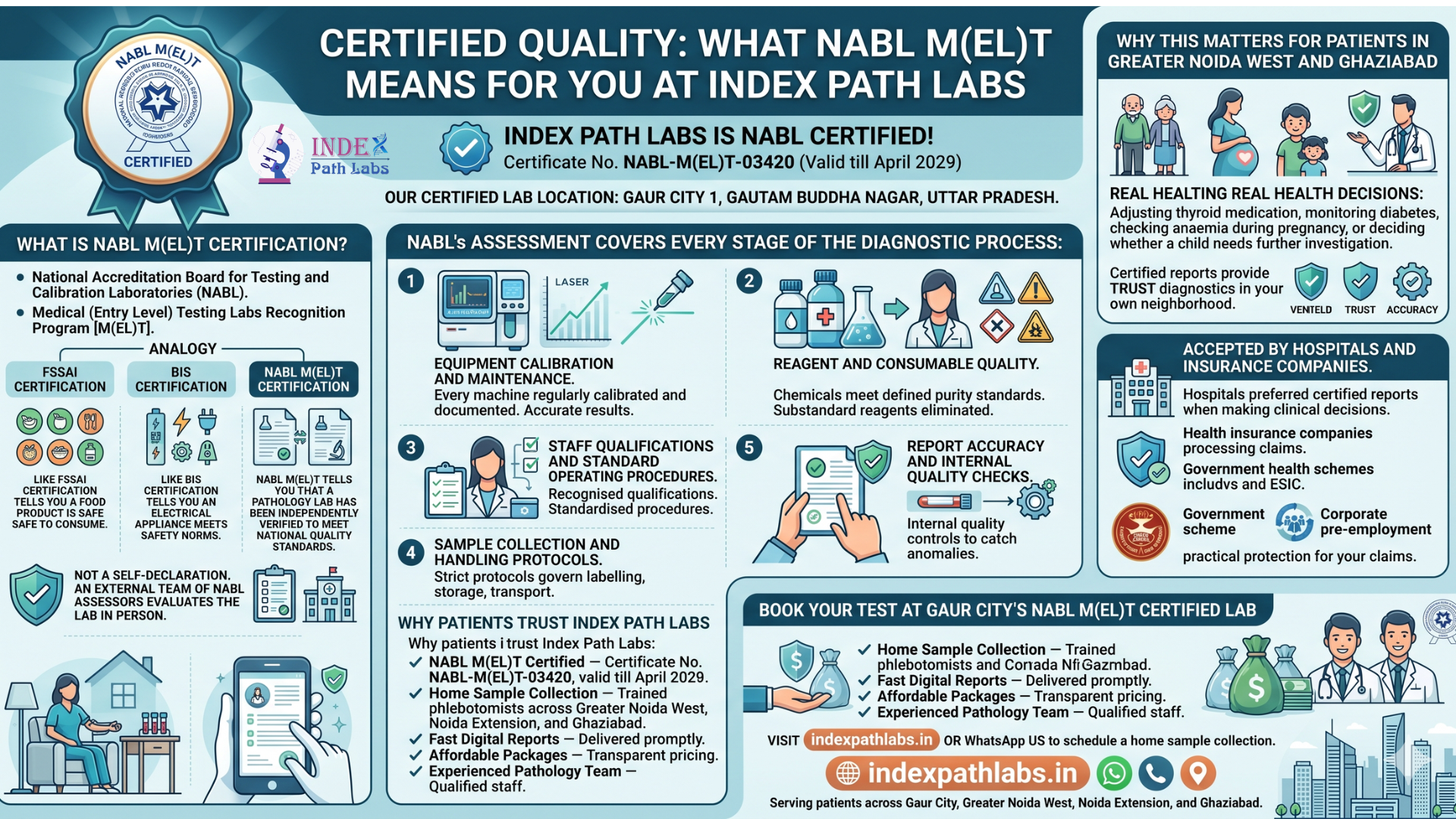
Understand what a CBC test checks, why your doctor ordered it, and what your results mean. - 👉 Index Path Labs Earns NABL M(EL)T Certification — What It Means for Patients in Gaur City
Learn why NABL certification matters for accurate, reliable diagnostic results in your area.
Related Posts
Index Path Labs Earns NABL M(EL)T Certification — What It Means for Patients in Gaur City
Getting a blood test done feels routine — until your…
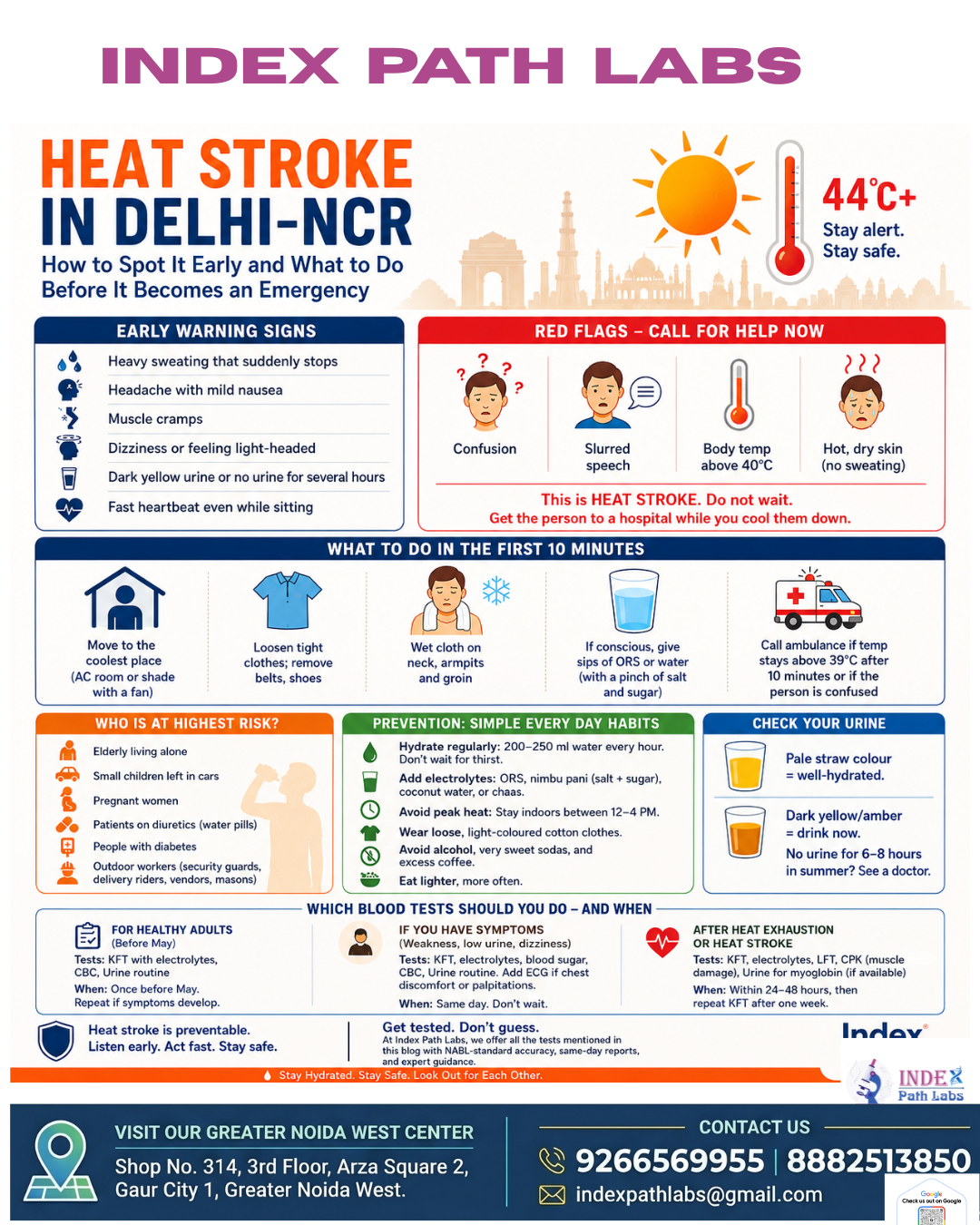
Heat Stroke in Delhi-NCR: How to Spot It Early and What to Do Before It Becomes an Emergency
[caption id="attachment_1417" align="alignnone" width="1080"] Heat stroke[/caption] Every May and June,…
Why Sample Handling Matters: How Direct-to-Lab Testing Gives More Accurate Results
Lab Science · Diagnostics Why Sample Handling Matters: How Direct-to-Lab…
2 Replies to “How to Prepare for a Fasting Blood Test: A Complete Guide for Gaur City Residents”